
Floyd County Criminal History Checks
No one search contains every Floyd County record. First decide whether the goal is a recent booking, a filed court case, a Georgia felony conviction, current state custody, a warrant, or a fingerprint-linked copy of your own history. Each answer has a different custodian. Bring a full legal name, date of birth, spelling variants, and any known case, incident, warrant, or booking number. A name match alone is not enough to identify a person.
Use the source closest to the event, then confirm the outcome at the next stage. The Floyd County jail can show current custody, but the clerk holds the filed charges and final disposition. The Georgia Bureau of Investigation's Georgia Crime Information Center receives fingerprint-supported arrest and disposition data, while Georgia Felon Search publishes a narrower felony-conviction product.
- Check the correct Floyd County court for the filed case and read every count through disposition.
- Use the sheriff's current-inmate list for a recent booking or present custody.
- Use Georgia Felon Search when the question is limited to public Georgia felony convictions.
- Request the source document from the arresting agency, jail, or clerk when the portal lacks detail.
- Order a certified disposition or fingerprint-based personal review when official identity-linked proof is needed.
Five Floyd Criminal Record Custodians
One Floyd County arrest can leave records in five places. The arresting officer writes the incident or arrest report. The Floyd County Jail makes the booking record and captures fingerprints. A prosecutor decides what charge to file, and a court clerk creates the docket. GCIC then links fingerprinted arrest data to reported dispositions. DCS or GDC may later hold supervision or prison information.
| Need | Start here | What it answers |
|---|---|---|
| Officer report | Floyd Sheriff or Rome Police | Allegation, scene, and agency narrative |
| Booking | Floyd County Jail | Intake, initial charge, bond, and custody |
| Case outcome | Superior, State, or Municipal Court clerk | Filed counts, hearings, plea, verdict, and sentence |
| State history | GBI and GCIC | Fingerprint-linked Georgia cycles or public felony results |
| Supervision | DCS or GDC | Published probation, parole, or state-custody facts |
This split explains why two official sources can show different facts without either being false. They may describe different stages or scopes.
Official Background Checks in Georgia
The Georgia Crime Information Center is the state repository. Its public route, Georgia Felon Search, is a paid search for Georgia felony convictions using full name, date of birth, race, and sex. GCIC does not conduct a general name check at its lobby. A local law-enforcement office may offer a broader consent-based check under its own rules, so confirm the scope before paying.
For a fingerprint-based Georgia check authorized by a service code, register through Georgia Applicant Processing Service. GAPS is operated for GBI by IDEMIA. The user registers, selects a print site and appointment, brings valid photo identification, and submits prints. The receiving agency and fee depend on the service code. The research documents a usual agency-results window of 24 to 48 hours.
The official GCIC overview shows the state repository's role in Floyd County criminal history.
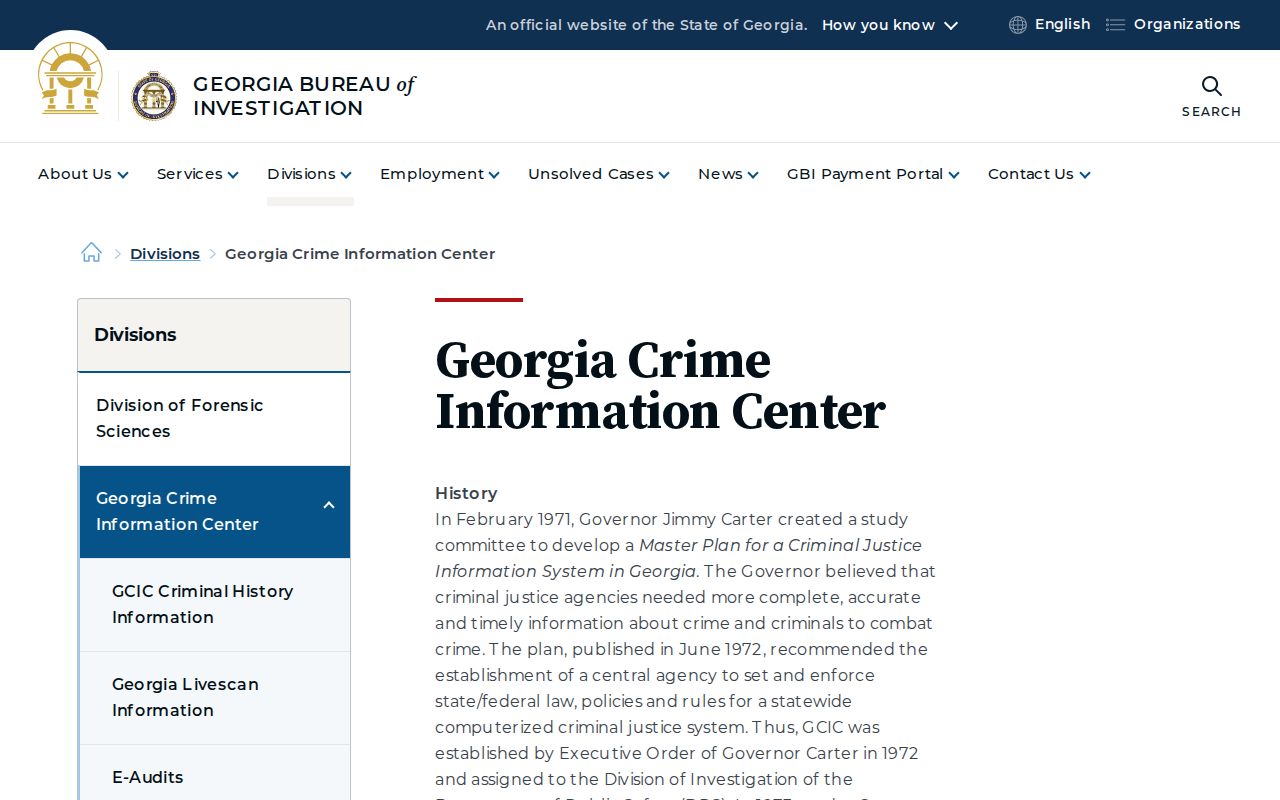
That repository layer is broader than a single Floyd County court docket, but public products still have limits.
Floyd Felon Search Has Limits
Georgia Felon Search is useful, but it is not a complete Floyd County criminal history. It targets in-state felony convictions. It does not replace the current jail list, misdemeanor and municipal dockets, the full documents behind a case, or a fingerprint-supported personal inspection. A no-result screen can mean that the record falls outside the product, the name data does not match, or a record is restricted.
The portal asks for exact identity details and payment. Check them before submitting a transaction.
| Field | Required | Use |
|---|---|---|
| Full name | Yes | Identity match |
| Date of birth | Yes | Full date narrows results |
| Sex | Yes | Statutory identifying characteristic |
| Race | Yes | Statutory identifying characteristic |
| Payment | Yes | Transaction fee displayed in the portal |
When the result matters, compare it with the Floyd County clerk's final disposition rather than treating the felony product as the whole file.
Kinds of Floyd Criminal Records
Floyd County criminal records are grouped by the act that created them. An incident report records allegations and police observations. A booking entry records jail intake. An accusation, indictment, or citation states a filed charge. The court file preserves docket events and the result. A warrant is a judge's authority for arrest or search, while a GCIC history ties fingerprinted arrest cycles to outcomes sent by courts and prosecutors.
- Arrest and booking: preliminary charge, bond, custody, and release facts kept by the jail or arresting agency.
- Court case: filed counts, motions, hearings, disposition, sentence, and public financial entries.
- Warrant: court and law-enforcement data that may be sealed, limited, or not yet shown online.
- Custody and supervision: Floyd jail, GDC, and DCS each publish different slices.
- Registry: qualifying registration data maintained centrally by GBI from sheriff-supplied facts.
These records should not be read as substitutes for one another. An arrest is an accusation, and a release is not a dismissal.
Floyd Fingerprints Through GAPS
GAPS is the route for authorized Georgia and federal fingerprint checks and certain personal or visa requests. A service code controls the purpose, recipient, and price. Do not choose a code by guess. The requesting agency should provide it. Registration then collects identity data and offers a print-site appointment.
The GAPS appointment interface is the official starting point for fingerprint capture tied to Floyd County criminal history.

The screen reinforces why a service code must come before the appointment. Bring valid photo identification and follow the receiving agency's instructions.
Floyd Criminal Records: What They Contain
A Georgia computerized criminal history is organized by identity and arrest cycle. A Floyd County court case is organized by case number and docket, while a jail record is organized around admission. Read the label on the record before drawing conclusions from a field.
| Name and identifiers | Legal name, aliases, date of birth, physical descriptors, SID, and fingerprint identifiers where authorized. |
|---|---|
| Arrest cycle | Arrest date, originating agency, charges, offense codes, and Offender Tracking Number. |
| Court data | Case number, filed counts, events, plea or verdict, dismissals, and final disposition. |
| Sentence | Custody, probation, fines, restitution, and conditions when public in the order. |
| Custody status | Local jail classification, transfer, state prison, or published supervision data. |
Protected identifiers, juvenile information, sealed documents, medical facts, and victim details should not appear in an ordinary public result.
Floyd Jail or GDC Search
The Floyd County current-inmate roster answers who is now booked locally. Its last-name search leads to an alphabetical list showing abbreviated name, age, sex, race, arrest date, classification, charges or warrants, and bond. It is not a profile system and does not show every booking field. Call Booking at 706-291-4111, extension 8834, or use the county's tracked records request when more detail is needed.
GDC Find an Offender covers sentenced state offenders and published supervision facts, not everyone in the Floyd jail. If a search fails, GDC advises trying the first four letters of the surname and selecting all offenders. Successful First Offender cases are excluded, and photos may be absent. A missing GDC result therefore is not a clean-record finding.
Record flow: Arrest › Floyd booking › filed court case › GCIC disposition › DCS or GDC when applicable.
Georgia Criminal Record Access Laws
Public access depends on the record and custodian. The Georgia Open Records Act is the fallback for Floyd Sheriff and Rome Police records that are not online. It generally requires a response within three business days, not full production within that time. The response may produce the file, set a schedule and estimate, or cite a lawful reason for withholding or redaction.
Key Georgia laws:
O.C.G.A. §§ 50-18-70 through 77 presume agency records open unless an exemption applies.
O.C.G.A. § 35-3-34 governs GCIC dissemination and public felony-conviction access.
O.C.G.A. § 35-3-37 controls Georgia record restriction routes.
O.C.G.A. § 42-1-12 establishes state registration duties and public registry administration.
Public does not always mean free, instant, or available online. Ask for a cost estimate before authorizing a broad search or redaction job.
Floyd Records Request Fallback
Use Floyd County NextRequest for sheriff-created reports or jail material that the current-inmate list does not expose. State the event, date range, location, people involved, arresting unit, known incident or booking number, desired format, and a fee limit. Save the confirmation. An urgent warrant or safety question should go to the official court or law-enforcement phone line, not an open-records queue.
Rome Police keeps reports made by Rome officers and accepts requests through its open-records channel. The official Rome page illustrates the local agency split.
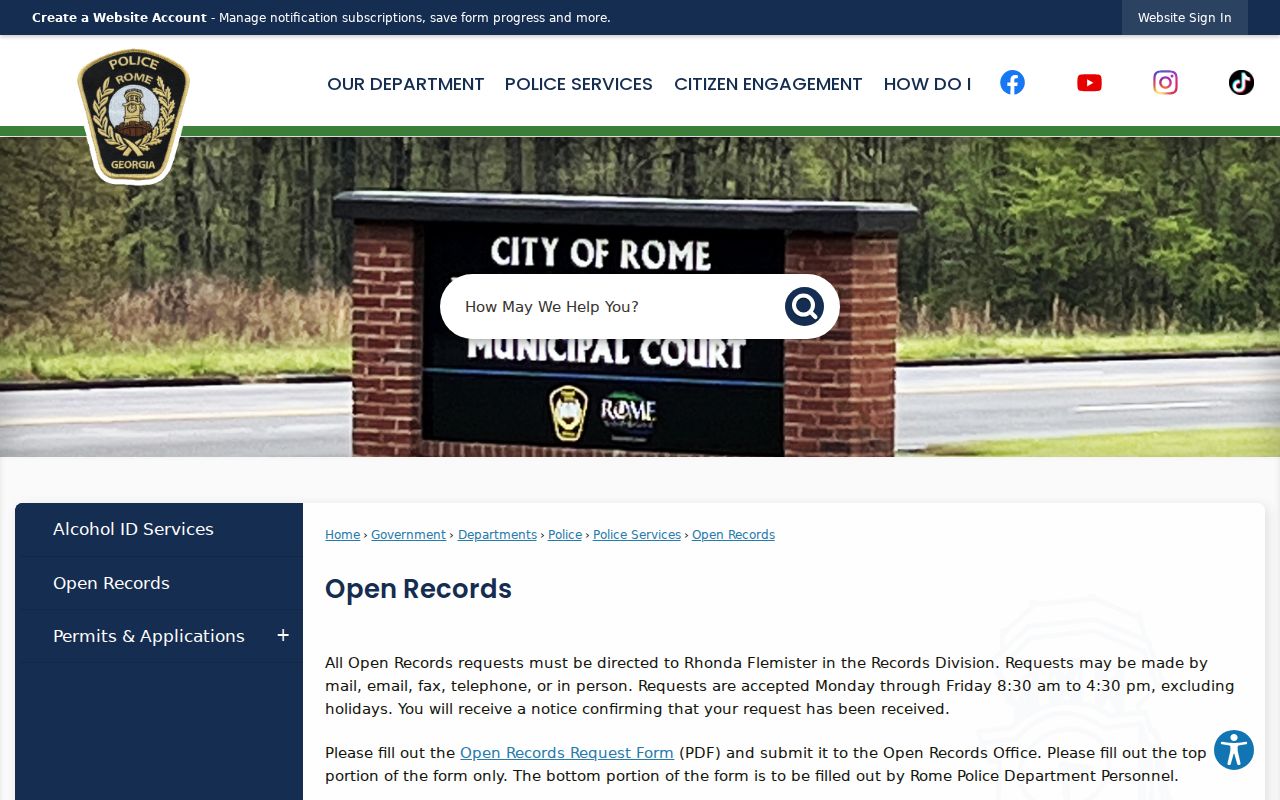
A Floyd jail booking can exist beside a separate Rome Police report, so send each request to the office that created the item.
Restricted, Sealed & Expunged Records
Georgia's main term is record restriction, not physical destruction. Eligible information is withheld from ordinary public and noncriminal-justice dissemination but remains available for authorized justice purposes. For arrests on or after July 1, 2013, contact the prosecutor responsible for the case. For an older arrest, begin with the arresting agency and the official request form before the package moves through the prosecutor and GCIC.
The GBI restriction instructions explain the route and forms.
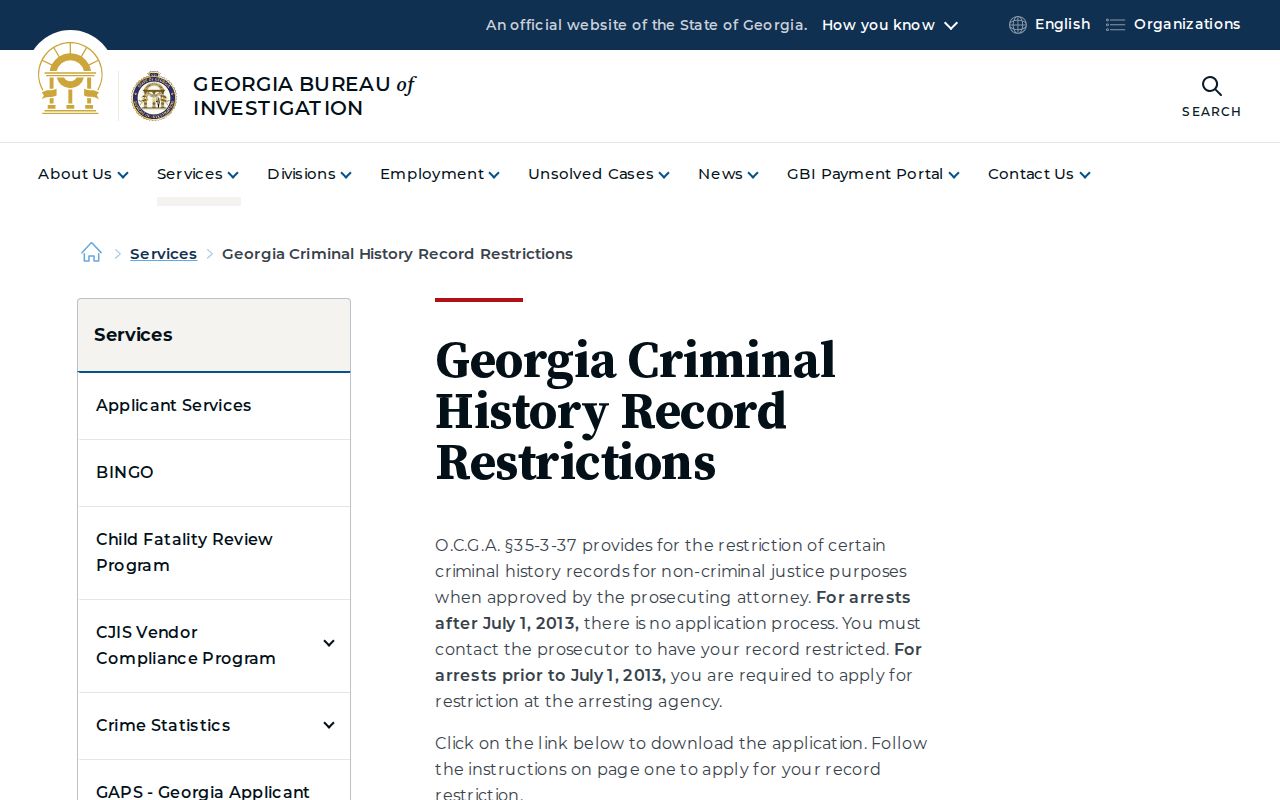
Obtain the Floyd clerk disposition and personal GCIC record first. A missing or wrong outcome often must be corrected by the agency that originated it.
Federal Records From Floyd County
Federal and state records use separate systems. Floyd County lies in the U.S. District Court for the Northern District of Georgia, and federal dockets are accessed through PACER. The FBI Identity History Summary is a subject-only fingerprint service, not a Floyd court search. Federal prison custody belongs in the Bureau of Prisons locator.
The FBI electronic ordering portal accepts Identity History Summary orders for the subject of the record.
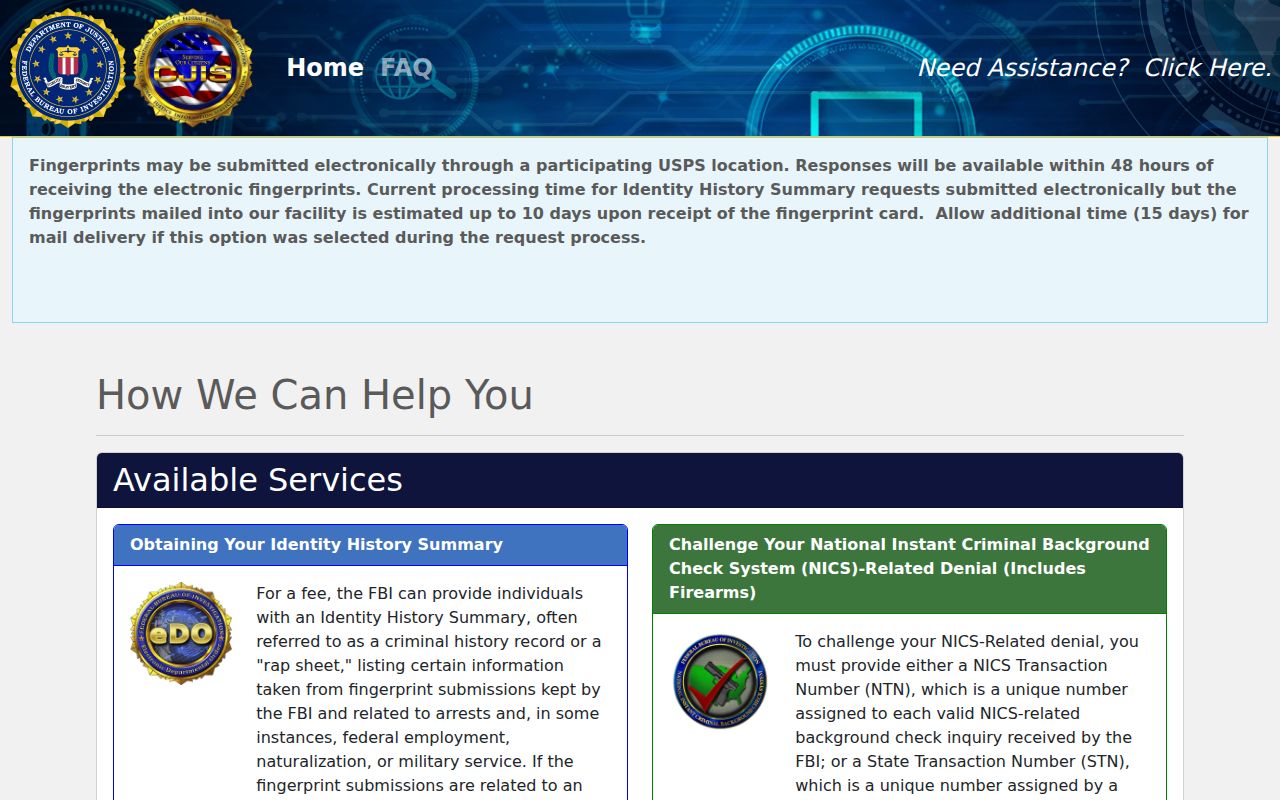
Its scope depends on information contributed to the FBI. Compare any result with the actual Floyd or federal docket when the final case outcome matters.
Floyd Probation and Parole Clues
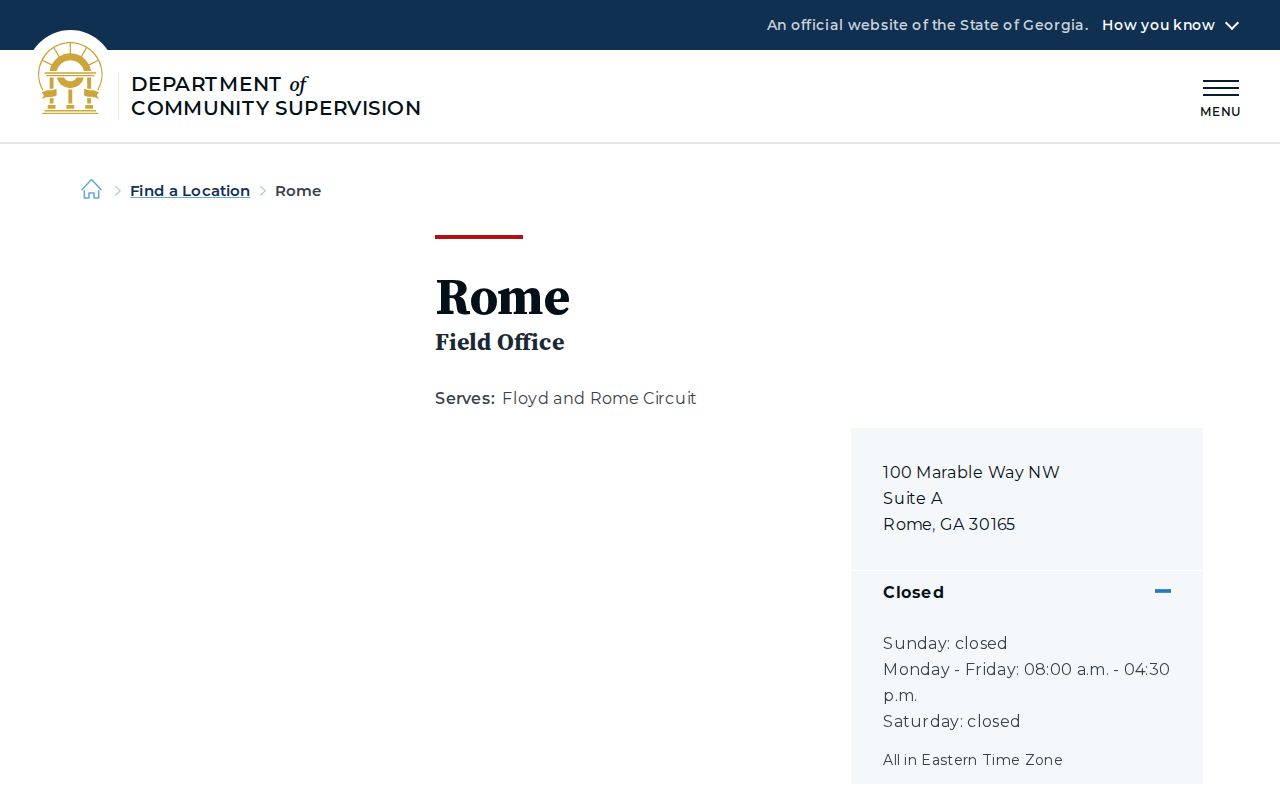
Adult felony probation and parole field supervision is handled by the Georgia Department of Community Supervision Rome Field Office, 100 Marable Way NW, Suite A, Rome, Georgia 30165. The office serves Floyd County and the Rome Circuit, answers at 706-295-6323, and lists weekday hours of 8:00 a.m. to 4:30 p.m. The State Board of Pardons and Paroles makes parole decisions, while DCS supervises people in the field.
The official DCS office page provides the Floyd County criminal supervision contact.
There is no general public probation dossier. Use the sentencing order, published GDC result, and a focused DCS inquiry, while recognizing that case notes and treatment data may be protected.
City-by-City Criminal Records in Floyd County
Floyd County has only two incorporated municipalities. Rome Police writes Rome reports and Rome Municipal Court keeps its citation files, while Cave Spring routes local requests through City Hall and its court contacts. Bookings from either city may flow to the Floyd County Jail, and higher-level prosecutions move to the proper county court.
Rome Record Check
38,934 estimated residents in 2025 · Police records and Municipal Court operate from Technology Parkway.
Cave Spring Record Check
1,200 residents in the 2020 Census · Fannin Hall is the city records fallback when no portal exists.
The Cave Spring City Hall page shows the public counter used for local record questions.

City records stay with their creators even when arrest, court, and state systems later receive related facts.