
Criminal Court Cases in Floyd County
Floyd County does not place every prosecution in one docket. Superior Court, part of the Rome Judicial Circuit, has general felony jurisdiction. State Court generally handles misdemeanor and traffic prosecutions. Magistrate Court creates first-appearance, warrant, and preliminary records, while Rome and other municipal courts retain ordinance, citation, and qualifying state-law matters within their limits. A search confined to one clerk can therefore miss a valid Floyd County court case held by another court.
The clerk for the court that received the charge maintains the case number, filed pleadings, orders, hearing notices, disposition, and sentence. The arresting agency still keeps its own incident report, and the jail keeps booking data. Those records may describe the same event, but neither replaces the filed court case. When the booking allegation differs from the accusation or indictment, the filed count and its final disposition are the key court facts.
Floyd County Court Jurisdiction
The charge level and place of filing point to the right Floyd County clerk. Start with the court shown on a citation, bond paper, hearing notice, or case number. If none is known, check more than one division rather than treating a blank Superior Court result as a countywide answer.
| Court | Typical criminal work | Useful clue |
|---|---|---|
| Superior Court | Felonies and returned indictments in the Rome Judicial Circuit | Indictment, felony count, or Superior Court case number |
| State Court | Misdemeanors and traffic prosecutions | Accusation, misdemeanor, or State Court calendar |
| Magistrate Court | Warrants, first appearances, and preliminary matters | Warrant application or early custody hearing |
| Municipal court | City ordinance, citation, and limited state-law matters | Rome or Cave Spring citation and city court notice |
A municipal citation may never become a Superior Court entry. Likewise, a felony booking can begin with a Magistrate Court hearing before the prosecution appears in Superior Court. Match the court name, case number, and filing year at each stage.
Floyd County Case Record Searches
Georgia has no single complete, free statewide trial-court docket. Use the Floyd County clerk channel for county prosecutions, then ask the correct clerk about older or nonindexed files. Search by case number when possible. A full legal name can work, but a common name should be checked against the filing year, court, and other public identifiers.
- Identify Superior, State, Magistrate, or municipal court from the charge, citation, or hearing paper.
- Search the official clerk system by case number, or use the full surname and given name.
- Narrow the result by filing year, case type, division, or party role when those controls appear.
- Open the register of actions and read every count through its last disposition and sentence entry.
- Ask the correct clerk for a certified disposition when official proof or an archived file is needed.
| Search item | Type | Best use | Caution |
|---|---|---|---|
| Case number | Text | Most direct match | Use the exact court format |
| Full legal name | Text | Find an unknown case number | Never identify a person by name alone |
| Filing year | Date or filter | Narrow repeat names | Arrest and filing years can differ |
| Court or case type | Filter | Separate felony, misdemeanor, and city matters | Check another court if no result appears |
| Party role | Filter | Limit results to defendants where offered | Labels vary by portal |
Rome Court Cases Stay Separate
Rome municipal matters have their own search route. The official Rome Municipal Court citation search is useful when a city citation or municipal bench-warrant issue does not appear in the Floyd County Superior or State Court index. The court and police campus also differs from the county courthouse complex.
The Rome search screen illustrates that a city record can be real even when the county felony docket is blank.
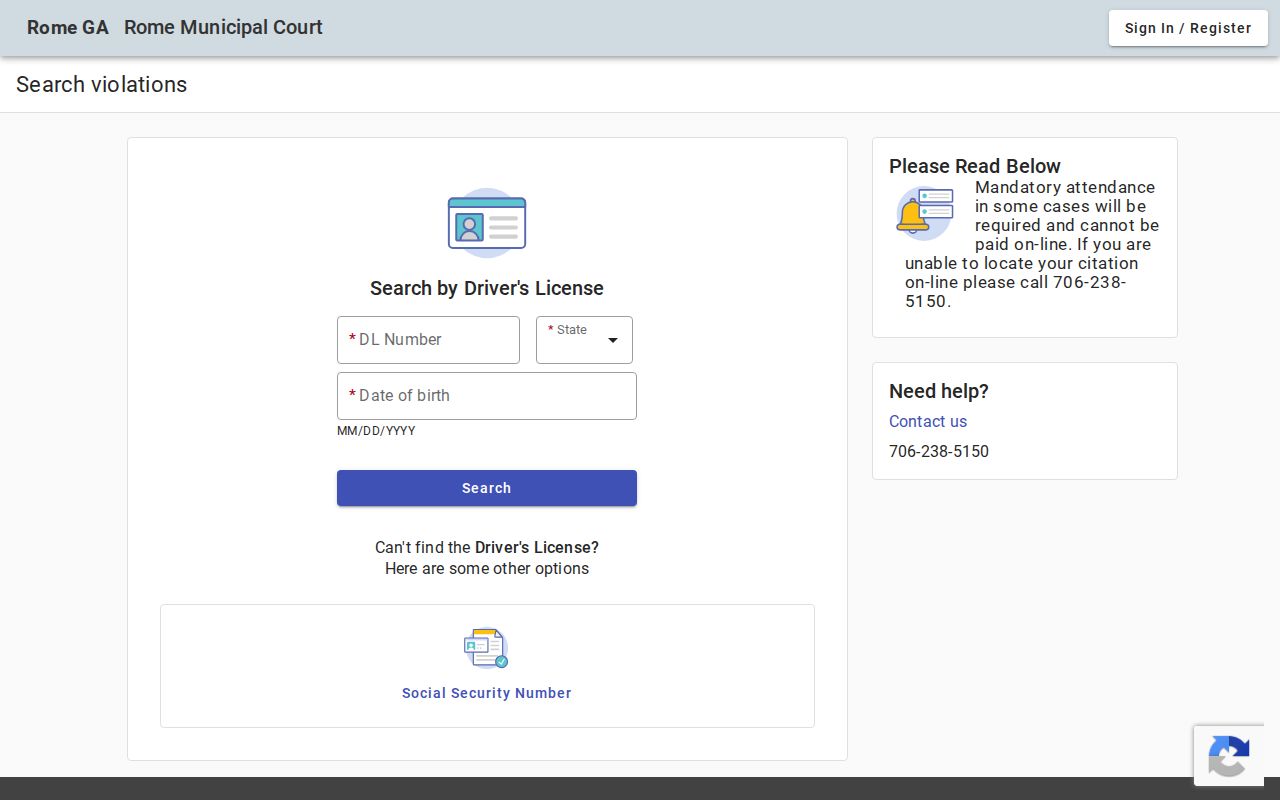
Use the citation or city court case details shown on the notice, then confirm any warrant status directly with the issuing court. Payment status alone does not prove that a bench warrant has been recalled and removed from law-enforcement systems.
What a Criminal Case File Contains
A Floyd County criminal case file is arranged by case and docket, not by jail admission. Read each count separately because one count may be amended, another dismissed, and another resolved by plea or verdict. “Closed” only means the clerk marked the case complete; it does not state why.
| Case number and court | Identifies the filing division, case type, filing date, assigned judge, and status. |
|---|---|
| Charging document | Shows the accusation, indictment, citation, count numbers, code sections, and amended charges. |
| Docket entries | Lists motions, orders, notices, pleas, verdicts, dismissals, and other procedural events. |
| Hearing dates | May show event type, courtroom, time, and judge, subject to calendar changes. |
| Disposition and judgment | States the result for each count, such as conviction, acquittal, dismissal, or nolle prosequi. |
| Sentence and conditions | May list confinement, probation, fines, restitution, and concurrent or consecutive terms. |
Document images can be free, account-gated, or available only from the counter. Protected identifiers, victim or minor details, and sealed filings should not appear in the public view.
Read Floyd County Docket Outcomes
Short docket labels can change the meaning of a Floyd County court case. The last event is important, but the result must be tied to the right count. A later amended charge can replace the wording shown at booking.
- Accusation
- A prosecutor's formal charging paper, commonly used without a grand-jury indictment where Georgia law allows.
- Indictment
- A grand jury's formal felony charging instrument, also called a true bill.
- No bill
- The grand jury declined to indict the proposed charge.
- Nolle prosequi
- The prosecutor formally declined to continue a charge, subject to court procedure.
- Disposition
- The recorded procedural outcome for a specific count.
A dismissal or no bill is not a conviction. An arraignment is only the hearing where charges are stated and a plea is entered. For a statewide identity-linked view, GCIC uses arrest cycles and reported dispositions, which is a different structure from the clerk's docket.
Criminal Case Stages in Floyd County
A Floyd County criminal prosecution can begin after an arrest, citation, or warrant process. The prosecutor decides which counts to file. Felony charges may proceed by indictment, while an accusation can be used where permitted. Motions and hearings then shape what reaches a plea or trial.
Case flow: Charges Filed › Arraignment › Pretrial › Plea or Trial › Disposition › Sentencing
Not every case touches each stage in the same way. A dismissal can end a count before trial, and sentencing may occur after a plea. Court outcomes should be transmitted to GCIC through Georgia's Offender Based Tracking System, but a reporting gap can make the clerk's certified disposition vital for a correction.
Find Older Floyd County Cases
An absent online result does not prove that no Floyd County case exists. Older material can be archived, scanned without a searchable image, stored on microfilm, held off-site, or indexed under a legal name that differs from the one tried first. Call the clerk with an approximate year, court, full name, and known case number.
Ask whether the file is available for inspection, whether retrieval takes advance notice, and what current copy or certification charge applies. Specify whether a plain informational copy or a clerk-certified disposition is needed. Counter staff can explain access steps, but they cannot decide whether a result qualifies for record restriction.
The official Rome police and municipal court location page shows the separate city campus readers may need for municipal files.
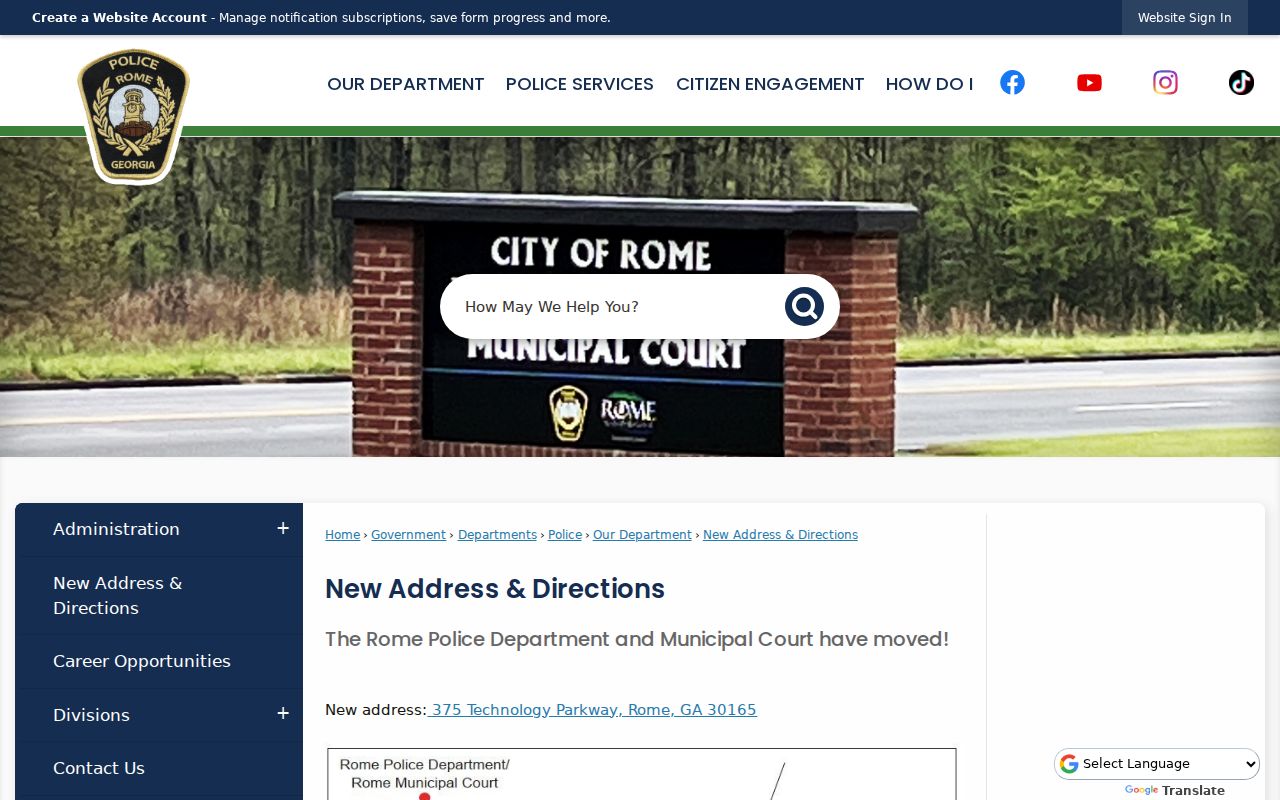
Confirm the current public counter and screening rules before travel because county and city files are not kept at one all-purpose records desk.
Access Rules for Case Records
The Georgia Open Records Act supports access to agency records unless an exemption applies, but court access also follows court rules, sealing orders, and laws governing protected material. Public access does not mean every filing is online or free. A clerk may redact full Social Security numbers, financial account data, protected addresses, victim information, juvenile details, and medical material.
Georgia record restriction under O.C.G.A. § 35-3-37 limits eligible criminal-history dissemination rather than erasing every government copy. A public docket may show that a sealed item exists without revealing its contents. Ask the clerk whether the case is off-index, restricted, sealed, or simply held in another division. Do not ask counter staff to interpret legal eligibility.
Federal Cases From Floyd County
Federal prosecutions arising in Floyd County belong to the U.S. District Court for the Northern District of Georgia, not the county clerk. PACER requires registration and provides federal docket entries and available filings under federal access and fee rules. Sealed filings and protected identifiers remain unavailable.
The PACER gateway is the correct official starting point for that separate federal layer.

PACER does not replace the Floyd County clerk search, and a county docket does not reveal every federal case. Keep the two court systems distinct when comparing names or outcomes.